Form and Repetion are the main focus of the lecture
point-line-shape-color-value-space-texture
art is a combination of these priciples
Spectrum of harmony/contrast:
(monotony)Harmony----------------------------------------Contrast(chaos)
One must be very intellegent to go on either side of the extremes. There is a very high chance of failure if you do not understand how to make it work.
repetition/rhythem/pattern
Balance: the feeling. Work does not literally have to be balanced but it should give a sense of it. This can be ccomplished with symmetry(bi-lateral, near-symmetry, etc), color, size, texture, etc
scale/proportion
The different revolutions of art we went over were Abstract Expressionalism, Minimalism, Post Modernism, and Today
------------------------------------------------------------------------
Outline of Reading
Form and Visual Ordering
-essential components of art: subject, form, and content
-no single one can exist on its own, nor beunderstood without them
-entire work > seperate components
-form: total arrangment of the composition (organizing it and composing it)
-we instictively look for connections in a piece to create order
-instinct for order is the basis of our appreciation of structure
Principal of Organization (composition/design)
-artist task is to bring order out of chaos
-subjection elements(line, shape, value, texture, and color) to the application of the 7 principles of organization (harmony, variety, balance, proportion, dominance, movement, and the economy)
-successful use of principles = visual unity(sense of visual oneness)
-flexible guide to organize elements
-principals don't function serperately. influence each other
Harmony
-pleasing relationship between different sections of a composition.
-occurs when different parts have things in common.(repeated colors, simular texture, etc)
-cohesion
-vastly different areas or images will begin to harmonize if they are treated in a simular manner
Repetition
-certain things are repeated or used more than once in a composition
-can be element, characteristic, or design
-does not have to be an exact duplicate, it is created by resemblance
Rhythm
-a continuance, flow, or since of movement that results from repeated beats/visual unit(element,characteristic,design)
-type of rhythm can be determined by: likeness of character, direction, type, value, size, etc.
-relies on repetition of pauses between repeating units
-negitive space/spacing/visual silence is important. Negitive spaces/pauses create accents
Pattern (model)
-any arrangement, design, or organized series of elements, and may function as the model for some sort of imitation
-motif: pattern repeated numerous times
-allover pattern: repetition of a motif. Is a new design and can only be seen when viewed as a whole
-instead of repeating patterns, some artists repeat an idea or theme
-theme can occur over a long series of work
Closure ("filling in")
-mental process of assembling to create a pattern
-"closure tendency": when artist gives minimal information and the viewer provides closure
-the whole is more important than the individual parts (negitive and positive space)
Visual linking: while closure unifies through implied group relationship, elements physically touching suggests other ways of unifying -> sharded space becomes the cohesive factor
Shared edges: shapes that share a common edge
-when connecting shapes of the same size and value, they limit the ability to create spacial references. Changing the malue makes them more distinct, but spcial depths get more ambiguous
-can become one object
Overlapping: shared area
------------------------------------------------------------------------------
Home work
Abstract Expertionalism:

Jackson Pollock
In both pieces below, there is repetition of line, color, and texture. At first look they are very chaotic and scrambled, however, you can see that they are very balanced and cohesive. I think on the spectrum they would rest some where in the middle because they are very visually chaotic yet when looking at it educatedly, you can see that it is harmonious. Repeated/simular styles of stroking and simular colors throughout gives familiarity in the work and helps the viewer become less confused from their initial sight.
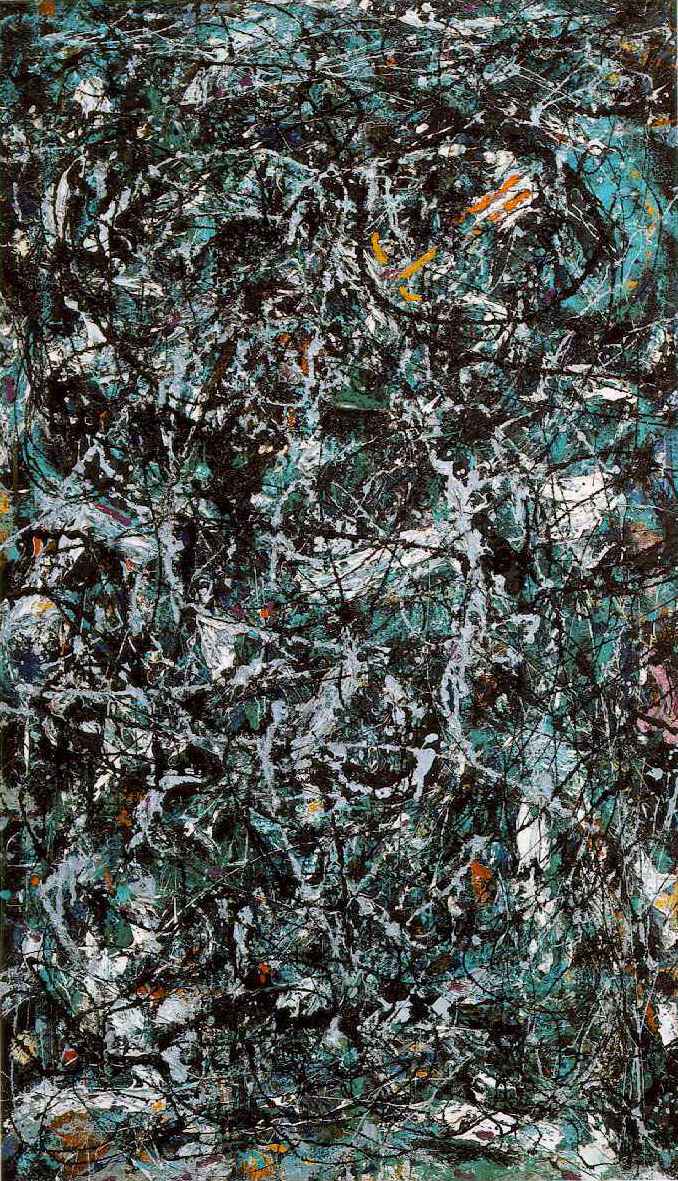 |
Full Fathom Five, 1947 |
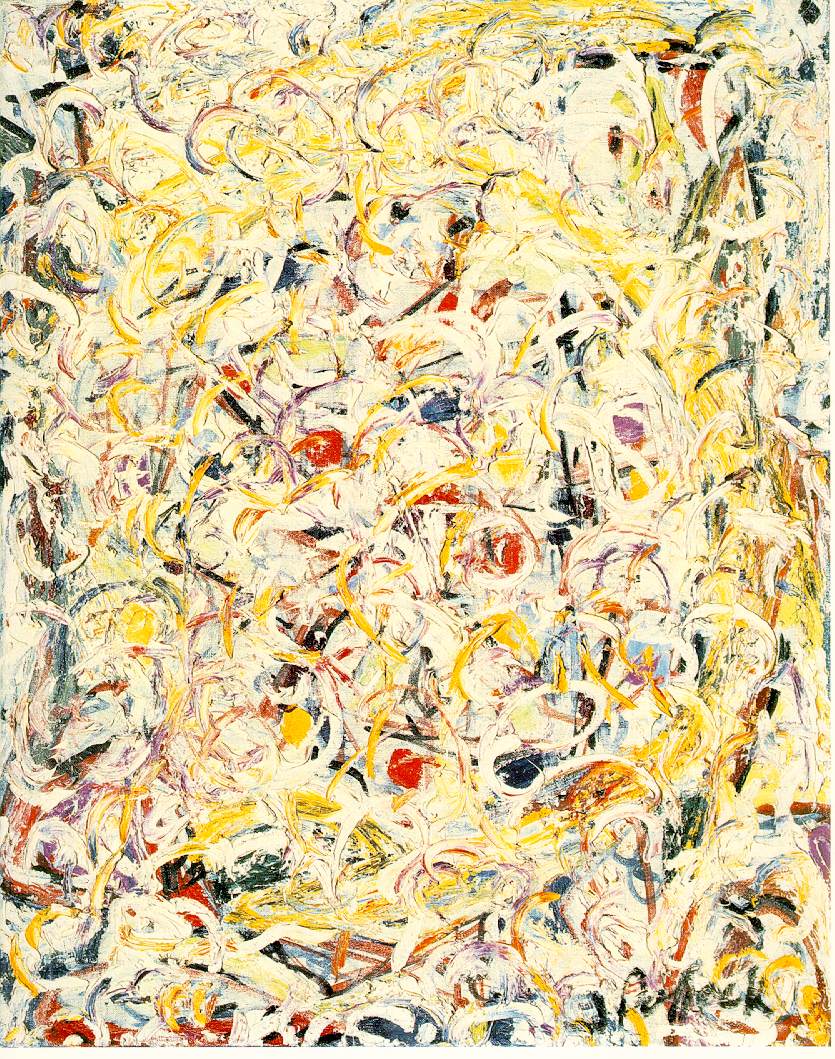 |
Shimmering Substance, 1946 |

Wassily Kandinsky
Kandinshy uses repetition of shape in the pieces below. His pieces are harmonic and simple. The repetition of the rectangular shapes (with rough edges) allows the veiwer to see relationships between the seperate shapes. Using simular shapes makes the connection easier and quicker than if he were to use other shapes.
 |
| No. 15, 1952 |
 |
Sketch for "Mural No.4", 1958 |
Minimalism:

Robert Smithson
In Smithson's work there is repetition of shape/form and space. On the spectrum, his work would be on the far harmonic side because of the simplicity of it all. With all the repetion, it leaves the viewers to find subtle differences in all the parts of a piece, and it also indicates that the forms are all part of the same piece. It shows relation even if the objects are far from each other.
 |
Tunnels |
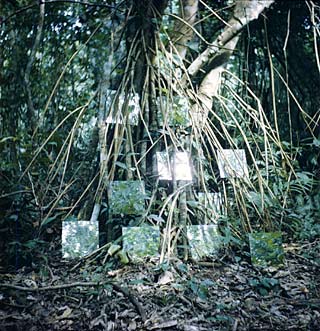 |
Yucatan Mirror Displacements, 1969 |

Dan Flavin
Flavin has repetition of color, line and space is his work. His work would be on the harmonic side because of its simplicity and cohesion. Repetion allows viewers to see the connection and relationship between different elements in a piece; makes the connection easier.
 |
untitled (in honor of Harold Joachim) 3, 19 |
 |
Untitled, 1996 |
Post Minimalist:

Richard Wentworth
Wentworth exibits repetition in shape, line and space. Along with the minimalists his work would sit on the harmonic side. There is enough simplistic repetition that a veiwer should not get confused about the intirty of a piece.
 |
Yellow Eight |
 |
False Ceiling, 1995 |


